



















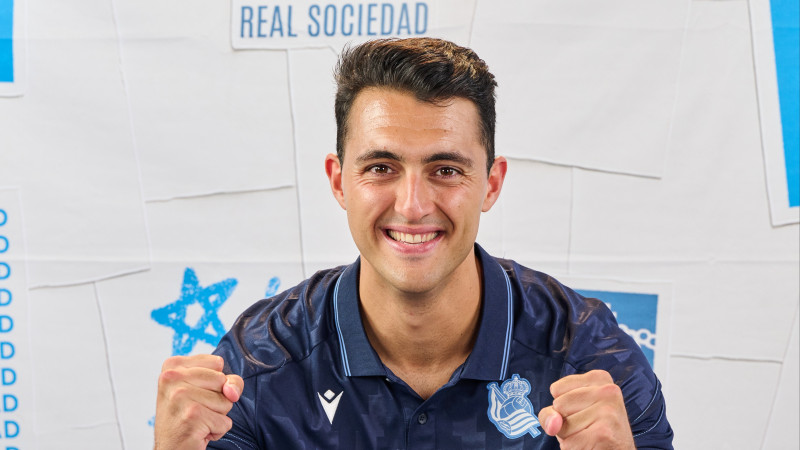
Arturo Ruiz during the season-opening Media Day.
Arturo Ruiz: “The players devour the work we set for them”
The Real Sociedad head coach speaks with Liga F about his career in the dugout, the historic victory over FC Barcelona, and the excellent season he is overseeing with the *txuri-urdin* side, whom he hopes to lead to Champions League qualification. He also reflects on the San Sebastián club's commitment to women's football.
23 APR 2026
“I still have the same group of friends from the first year of primary school, since I was 3 years old,” begins Arturo Ruiz (Madrid, March 9, 1997). A coach loyal to his roots despite reaching the pinnacle of women's football. His story began with kickabouts with his friends after school, until at 4-5 years old, his mother decided to go to Club Unión Zona Norte. “She asked if they could give us a trial, and most of the group went. The following year, we formed a team with other boys,” he recalls. He started playing as a centre-back and left-back, always as captain, and that's where his coaching instinct was born. “I’ve always enjoyed being very competitive, communicating, and looking after my teammates. My experiences as a player have helped me understand the footballers better, and how to lead a dressing room,” adds Arturo, whose life changed at 18.
“I wanted to start working and I asked my coach, who was the coordinator for all the teams. I was playing for Juvenil A at Club Unión Zona Norte and I finished the season as assistant coach for the U14s,” he states. From there, he began to earn his qualifications and started coaching while balancing it with a degree in Pedagogy, and later Psychology, though he hasn't finished it. “I discovered that coaching was my calling. I was very clear about it, and I went for it from the very first moment. At Club Unión Zona Norte, I had a lot of methodological freedom; the months I coached in the Tercera División at Santa Ana were also very important, but it was the Master's in Sports Psychology that opened the doors to CD Leganés,” he explains. After a year and a half as a psychologist in the youth teams of the 'pepinero' club, he signed for Atlético de Madrid.
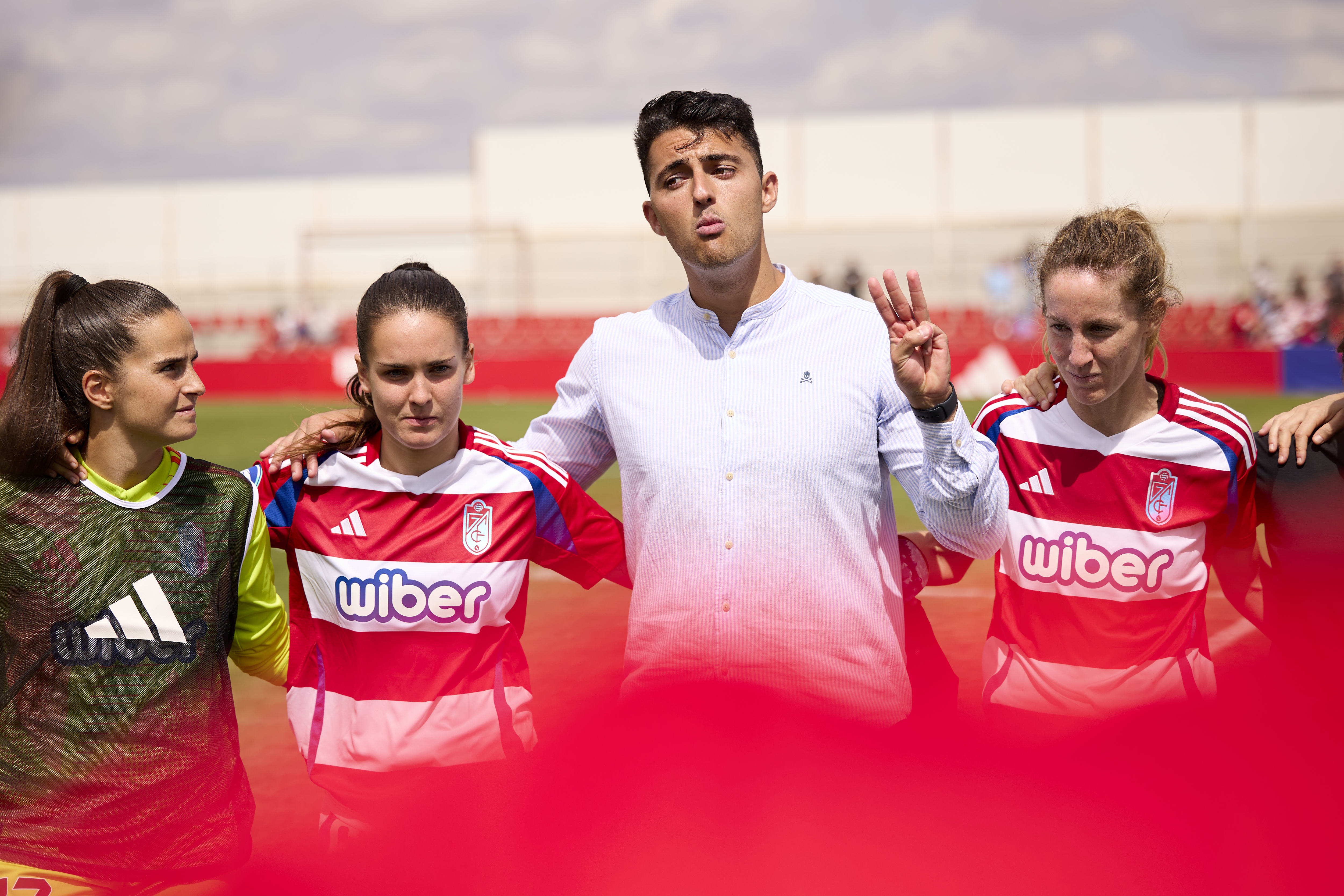
He joined as coach of the U19s and the C team, which was his first experience in women's football. After four years at the 'colchonero' club, and a month as an individual analyst for the first team, the dismissal of Manolo Cano led the Madrid club to summon him to the Metropolitano. “There, they proposed I become head coach. I didn't expect it because I thought they were going to offer me the assistant role,” confesses the Madrid-born coach, who achieved seven wins, one draw, and one defeat to qualify the team for the Champions League preliminary round after a four-year absence. “I've sometimes thought about what would have happened if that first opportunity hadn't gone well, but fortunately, we'll never know,” replies Arturo Ruiz, who then signed for Granada CF in what was his first experience from the start on a Liga F Moeve bench. “It was a wonderful dressing room,” recalls the coach about a season that will go down in history.
The 'Nazarí' team finished in 5th position with 45 points and reached the Copa de la Reina semi-finals. “That summer, we immersed ourselves in what Granada was and in the players we had. Everyone in that dressing room was at a similar point in their careers, with a great hunger to enjoy and do things well,” replies the coach, who packed his bags again in the summer and signed for Real Sociedad. “I had zero doubts. I came to Donosti, and in all the conversations I had with Maider and Garbiñe, we agreed on everything. I'm very happy here,” he explains. The 'txuri-urdin' club experienced a summer of reconstruction with the departure of many important players and the arrival of others. “When you come off a difficult season, it's very positive to have changes, and with my staff and Maider, we built the pre-season,” he states.
A transfer market where the San Sebastián side opted for talent from Zubieta. “It's a clear identity of the club, to have the largest number of players from Gipuzkoa, and for anything we can't find here in-house, we go and look for it elsewhere. That provides a lot of stability, and it's one of the pillars of Real Sociedad,” he expresses. Precisely, that happened in the winter transfer window when Bayern Munich decided to revoke the loan of Edna Imade, and the club decided not to sign any new players. “We were looking at options, but we weren't going to bring anyone in to replace Edna, but rather someone who could be here for a year and a half, two and a half years... for us, it was a stimulus, and it served to increase the motivation of other teammates,” analyses Arturo, who confesses that “the team set the objective of reaching the Champions League from the February-March break.”
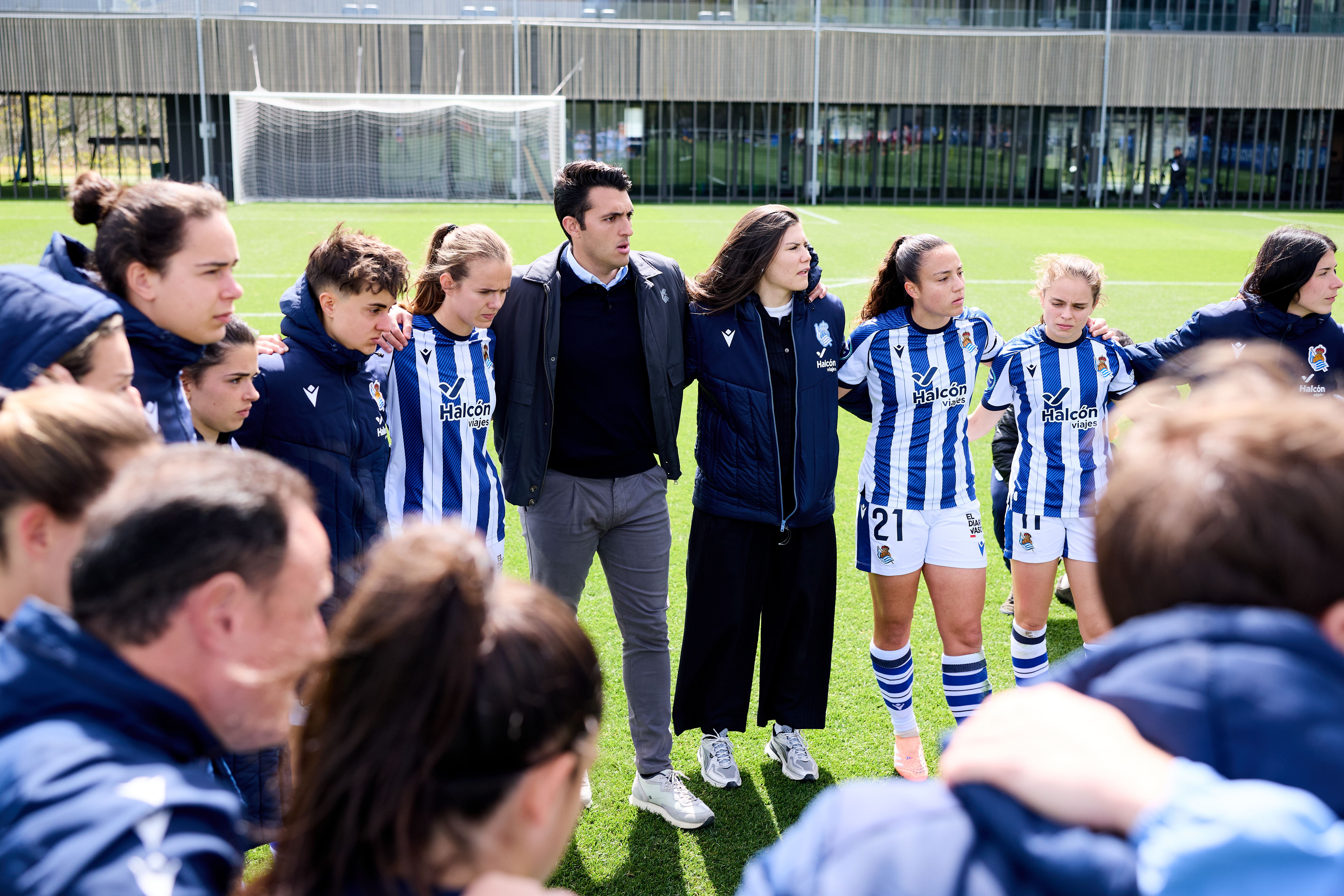
Furthermore, the coach quickly adds that “our objective is to be the most competitive team possible, have a very healthy day-to-day, develop players from the academy, and with the demand for results, but winning isn't the main objective.” That strong daily performance has seen Real Sociedad reach the final five matchdays in a privileged position, 3rd in the standings with 54 points, eight ahead of fourth place. “I can't imagine the day we qualify for the Champions League because I want to live it, and I still prefer to be cautious. Even though we have a good advantage, we have a difficult schedule,” he replies. Precisely, in that schedule, they will face FC Barcelona, whom they already defeated 1-0 in the first-round fixture. “A match we enjoyed a lot, and in which everything that needed to happen, happened. We defended very well and were very consistent,” he analyses.
That 'txuri-urdin' victory is the only defeat for the 'azulgranas' this season. “For me, FC Barcelona was fortunate to get a point at Zubieta, but they weren't accurate, and furthermore, they came with many absences. All the factors aligned, and everything that depended on us, we did well,” explains the Madrid-born coach, who insists that “you have to prepare psychologically to be very competitive in that match, with a very deep tactical plan with and without the ball, and having a very clear idea of what to do in all aspects of the game,” he analyses. One of the keys to Real Sociedad's success is the involvement of Arturo and his entire coaching staff in putting in many hours of work at the Ciudad Deportiva, including mornings on their days off. “At least the days are a bit longer now, so I do see some daylight in these months,” he replies with a laugh.
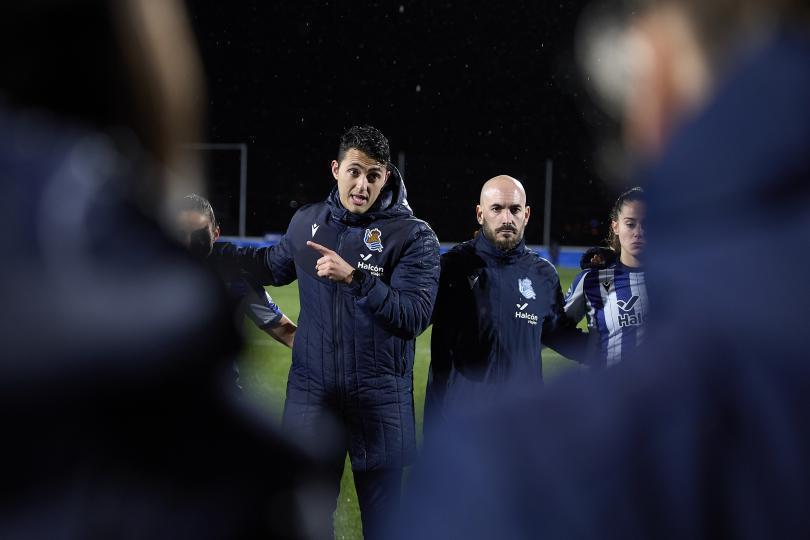
To which he quickly adds that “I am very grateful to my staff because they are just as involved as I am, and we have a very high level of professionalism. The players are very united and devour all the work we propose to them day by day. Furthermore, all the resources we have are another key to the team's good moment,” he states. Precisely, the San Sebastián club built a new stadium for its women's team, as well as a new building with changing rooms, offices, a gym, a medical room, a physiotherapy room, and video and press rooms. “We have many more natural grass pitches, a building for the players and staff, and, above all, beyond the material resources, how the board perceives the women's team, and how much support the fans give,” explains the coach, who also values the improvements in the Spanish competition.
“Compared to last year, this season every match is played on natural grass. I am also a firm believer in VAR because I think the standings would be very different if it didn't exist, and it's a very important step forward because it brings peace of mind to the referees,” highlights the Madrid-born coach, who doesn't hesitate to focus on “the improvements that have been made in marketing and in activities to promote the competition.” Furthermore, the coach, who is also part of the Spanish Women's Football Federation Commission, states that “we still need to continue improving in visibility, attendance at matches, and continue helping the referees, all rowing in the same direction to generate the highest level of competition and for Liga F to continue growing much more,” concludes a coach who hopes to lead Real Sociedad to compete in the top European competition.