


















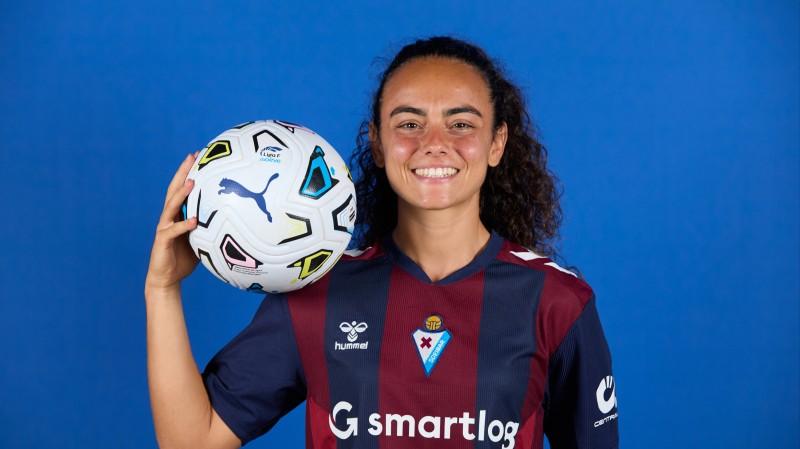
Adela Rico: “Studying medicine can be combined with football”
The SD Eibar midfielder chats with Liga F Moeve about her journey to reach the top flight, where she combined playing football with studying for a medical degree. She also discusses the importance of her studies, her family's support, and the Armeros club's commitment to equality between its men's and women's teams.
19 NOV 2026
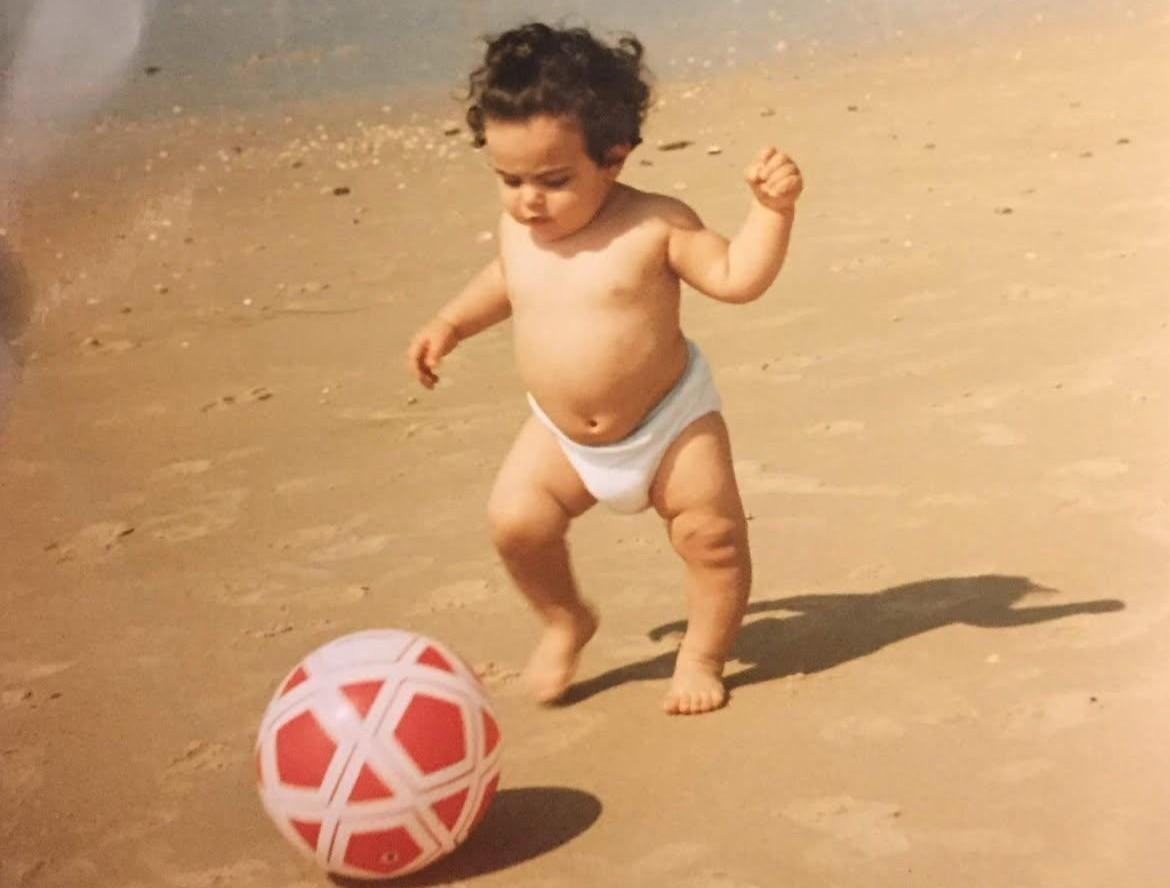
“I come from a very small village where there was no team, but I grew up playing football wherever I could, in the streets, at the sports centre...”, states Adela Rico (Llera, 19 July 2001). Her passion for football was born from that innate curiosity in athletes, and from her father, her first role model, who instilled in her and her sister Ana a love for the ball. “He played in his day, and someone who loves football is always thrilled when their daughter also plays. I have a photo where the ball is bigger than me,” she says, laughing. Her family's support has always been key to her becoming a professional player. “They have supported me without putting pressure on me, and they have given me all the strength I needed to continue,” she states.
Her first steps were in futsal, and part of Adela's current playing style comes from those years of learning. “Especially the technical aspects, and how I move in certain situations. Then I had to unlearn many things when I transitioned to 11-a-side football because they are very different sports,” explains the midfielder, who experienced that new step as a huge leap. “Because I never played 7-a-side football, and the first coach I had told me that this wasn't like futsal, that I couldn't give the attacker two metres, and I had to change my mindset, but it wasn't difficult, and I really enjoyed the long passes, which I couldn't do in futsal,” she reaffirms. Her father was once again a vital figure, driving her to and from those training sessions.
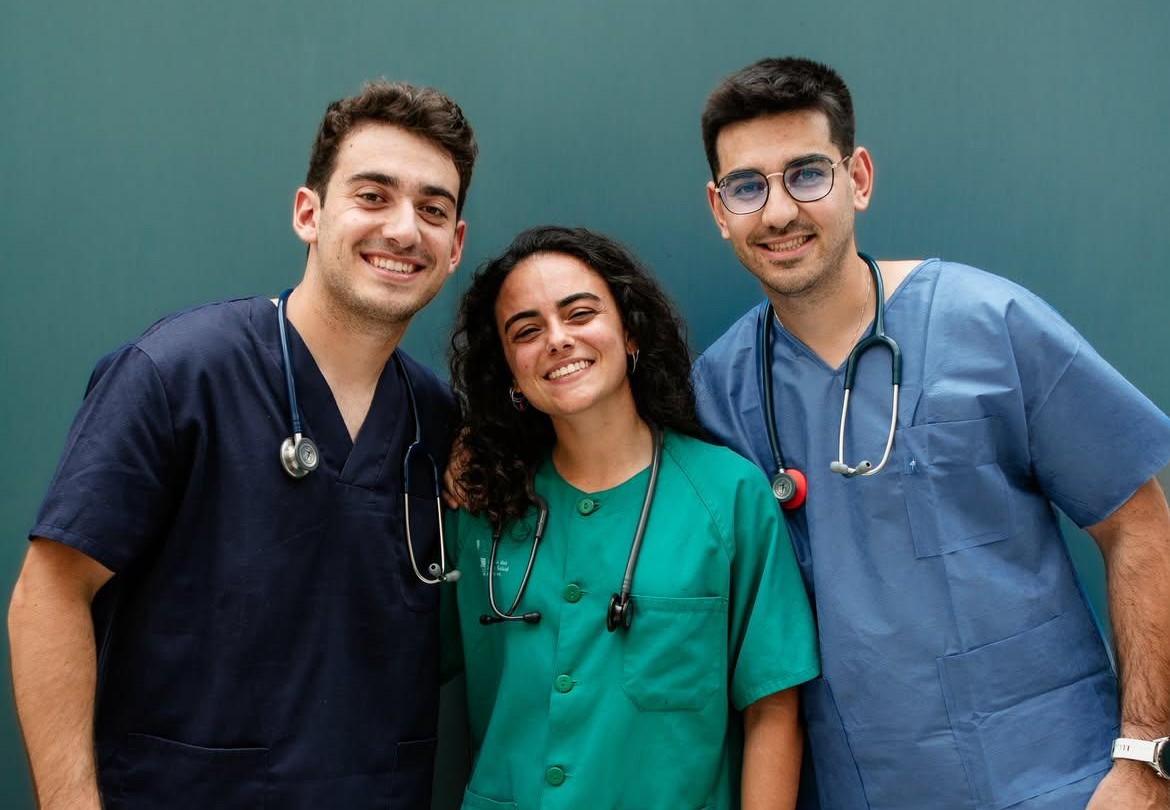
Her family not only instilled in her a love for football but, above all, the importance of education. “There have been several times in my life when I had to travel a lot, I wasted a lot of time going to and from training, but I never considered missing a training session or giving up my academic studies. That has also helped me to organise myself,” she declares. As the years went by, it became increasingly clear to her that her passion, besides football, was medicine. “I wanted to do something related to health, and in high school, I chose to study Medicine. At no point did I consider turning back,” adds the player from Extremadura, who, without knowing it, became an example of how to combine the two disciplines.
“I will always advocate for diversifying your interests. Because it helps you grow immensely, and you will be a more complete and stable person. I encourage everyone to combine both things because it can be achieved,” says the midfielder, who, while studying, played for Extremadura FCF, Extremadura UD, CD Badajoz, Santa Teresa, and Sport Extremadura, without considering that she could be a professional footballer. “I saw it as a distant dream because there weren't many opportunities in Extremadura,” she recalls. Her turning point came in 2024, when CP Cacereño signed her to debut in Primera RFEF, although, despite the leap in level, her medical career remained a priority. “I wanted to finish my degree in the scheduled years and I was committed to maintaining that commitment,” she states.
During that year with the Extremadura team, she completed her studies and came close to promotion to Primera División, losing in the play-off final. “It was a chaotic year, but it was the one where I enjoyed both things the most. Because I did my practicals, where I saw real Medicine, in contact with patients, and I also enjoyed a wonderful year at Cacereño,” admits the player from Llera, who then “started to think that perhaps I could continue with football and, once I finished my degree, resume it at another time. Until that moment, my intention was to continue my medical career.” After that season, and with hardly any experience in Primera RFEF, the eye of Rocío Candal fell on her to be part of the SD Eibar project in the top flight.
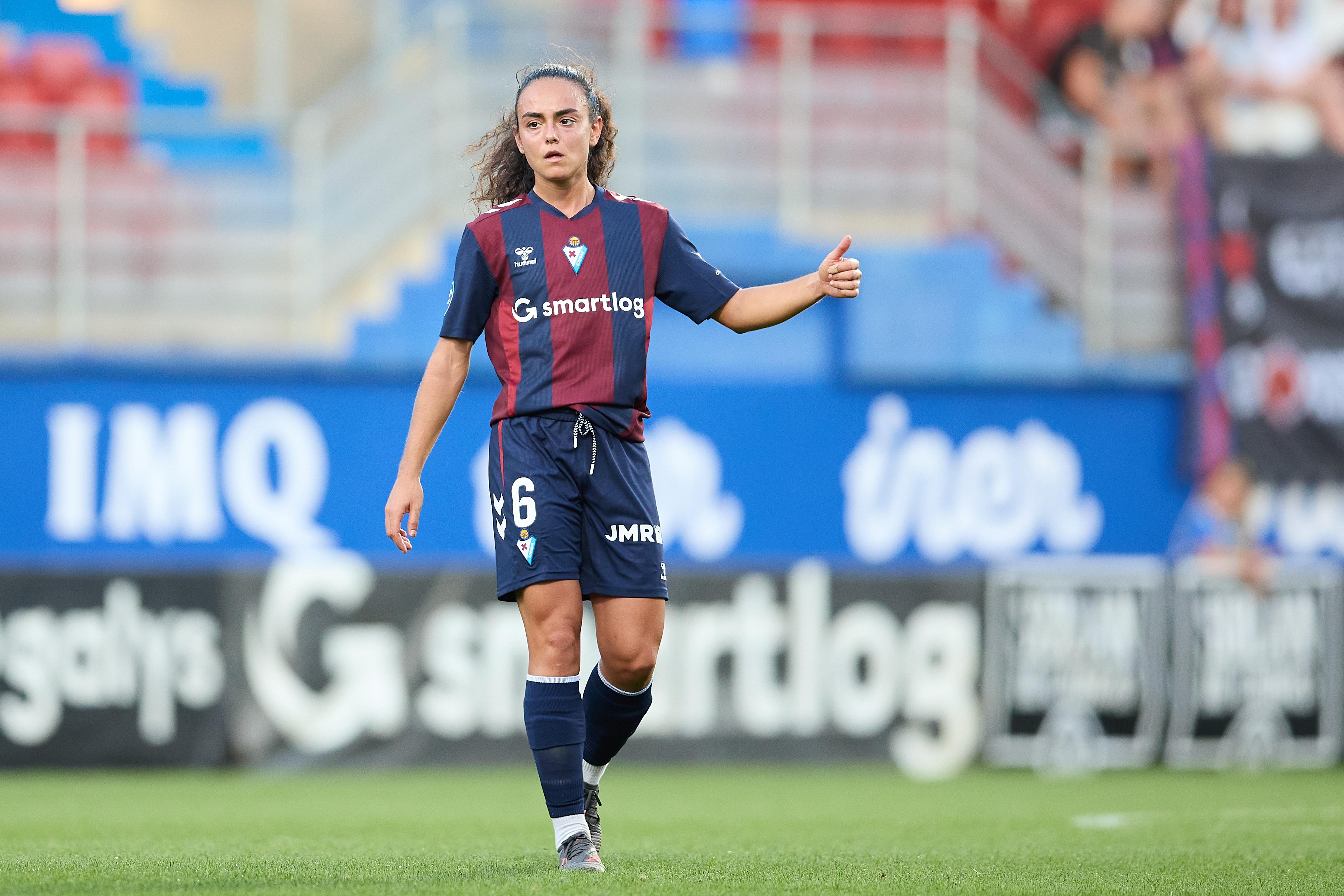
“She is a sporting director who enjoys scouting across different divisions, she loves football, and that gives her an experience that others who don't watch as much football don't have. We have a lot of faith in her eye for talent,” she praises Rocío Candal, who put her trust in her, and Adela, who initially had doubts, quickly accepted the offer. “I wondered if it was the right time to take the step, the doubt of not wanting to rush things, but sometimes you have to take the plunge when the opportunity arises,” she says. Despite arriving with an injury, she adapted perfectly. “I found a dressing room that embraced me from the start. There's an impressive human quality, and that made it easier for me,” expresses the midfielder, who is part of a club that supports both its women's and men's teams equally.
The player from Extremadura does not hesitate to lavish praise on SD Eibar. “It's fortunate that a club that doesn't have as many resources as others takes such good care of this aspect. It's not the same to have a gym at the training ground as it is to travel,” although she is not complacent because “we are professional footballers, and we need a minimum of infrastructure and resources to do our job. If clubs want that performance on the weekend, they have to provide us with these resources.” This year, the Armeras are fighting to secure another season in the top flight. “That commitment to the same core group from last season and with all the new additions this year has allowed the project to grow immensely. The necessary adjustments have been made,” she states.
That strength of the group, where Adela is already one of the 'veterans', has allowed the new signings to adapt. “There's a good dressing room atmosphere, and we have that feeling that everyone is pulling in the same direction,” clarifies the player from Extremadura, who has been impressed by how derbies are experienced in the Basque Country. “One of the first things you learn is that derbies are hugely important. It's impressive to see so many children playing in the streets. Those clashes are experienced differently,” highlights a footballer who gets emotional every time she looks back. “The passion for football has always been there, but female footballers haven't been given the space to focus solely on it. I grew up surrounded by people who combined it with their jobs.”
Furthermore, she highlights her perspective for women's football to continue growing. “That more and more girls play